
- Home
- Garage Door Openers
- Opener Repair
Opener Troubleshooting
Garage Door Opener Repair in Pewaukee, WI
When your garage door opener stops responding, hums without moving or reverses for no reason, the fix is often simpler than replacing the whole unit. Pewaukee Garage Doors repairs openers for homes across Pewaukee, WI, from remotes and keypads to safety sensors, logic boards, gears and limit settings. We service common brands such as LiftMaster, Chamberlain and Genie, and we'll tell you honestly when repair makes sense and when replacement is the better value.
- Same-day service
- Price before we start
- Safety-tested
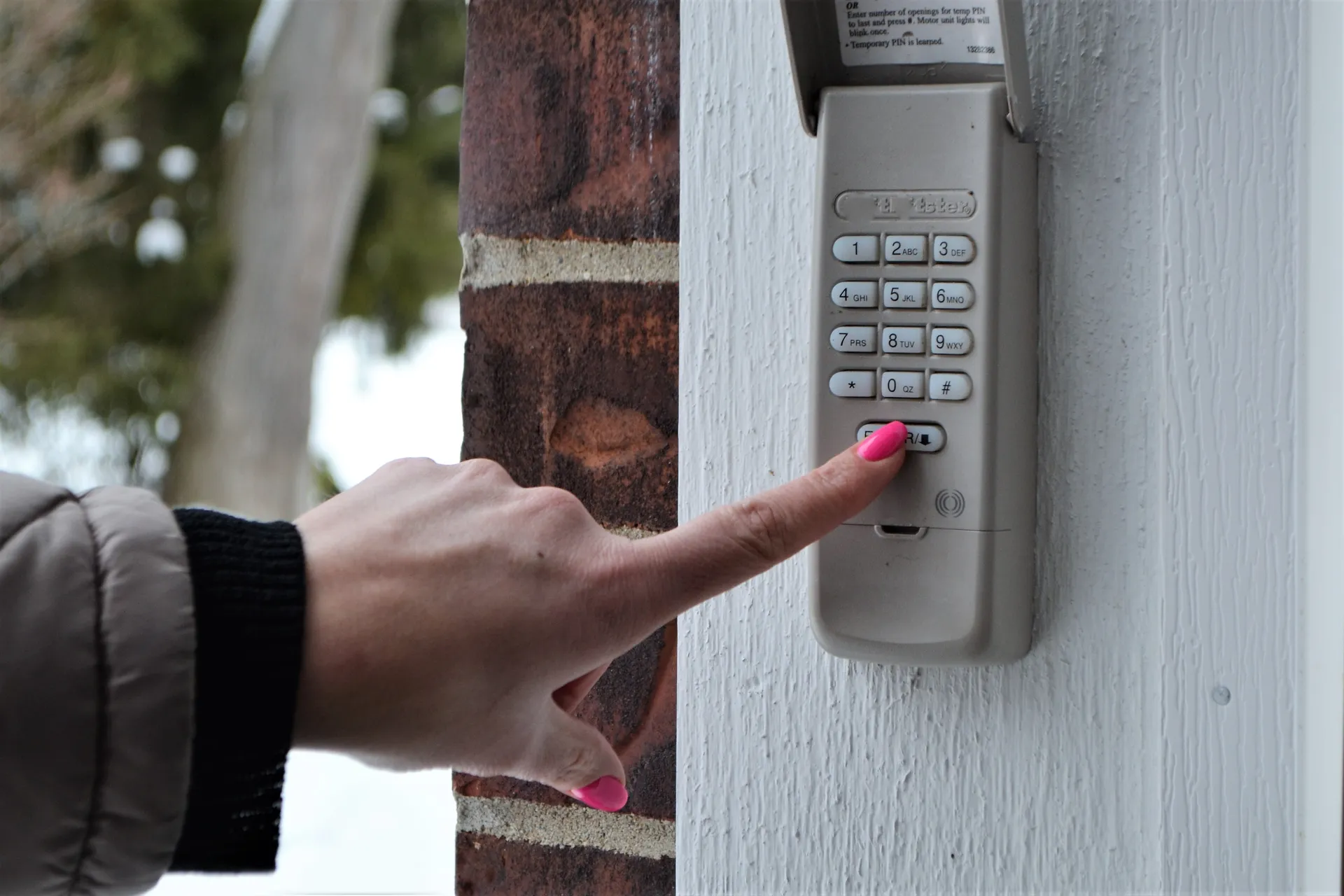
Remotes and Keypads
When the Remote or Keypad Stops Working
A remote that won't open the door is the most common opener complaint we hear, and the cause is often simple. The battery may be weak, especially after a cold snap. The remote may have lost its programming after a power surge or a logic board replacement. The lock or vacation feature on the wall control may be switched on, which blocks remotes on purpose. Some LED light bulbs in the opener or nearby fixtures give off radio interference that cuts remote range, which surprises a lot of people. Before we look at anything complicated, we rule out these simple causes first.
Keypads mounted outside the garage take a beating from Wisconsin weather. Cold drains their batteries, moisture can work in behind the buttons, and a keypad may need to be reprogrammed to the opener after a battery change or a board replacement. If the keypad lights up but the door doesn't move, the issue is usually programming or range. If it doesn't light at all, it's often the batteries or a failed keypad. Replacement keypads are generally easy to add, and we make sure the new one is compatible with your opener's radio frequency and security system before installing it.
Compatibility matters for remotes too. Openers from different eras use different radio frequencies and coding systems, from old dip-switch fixed codes to rolling codes and newer encrypted protocols. A universal remote can work with many older and newer openers, but not every one. Built-in car buttons that program to the opener are convenient, though some newer openers need an adapter to work with older vehicles. If you still have an older opener with a dip-switch remote, that's a security weakness worth fixing, since fixed codes can be copied or guessed. We'll explain the options that work with your opener.
- Weak or dead remote batteries
- Lost programming after a power surge
- Lock mode turned on at the wall
- LED bulbs causing radio interference
- Outdoor keypad needing reprogramming
- Car buttons that need an adapter
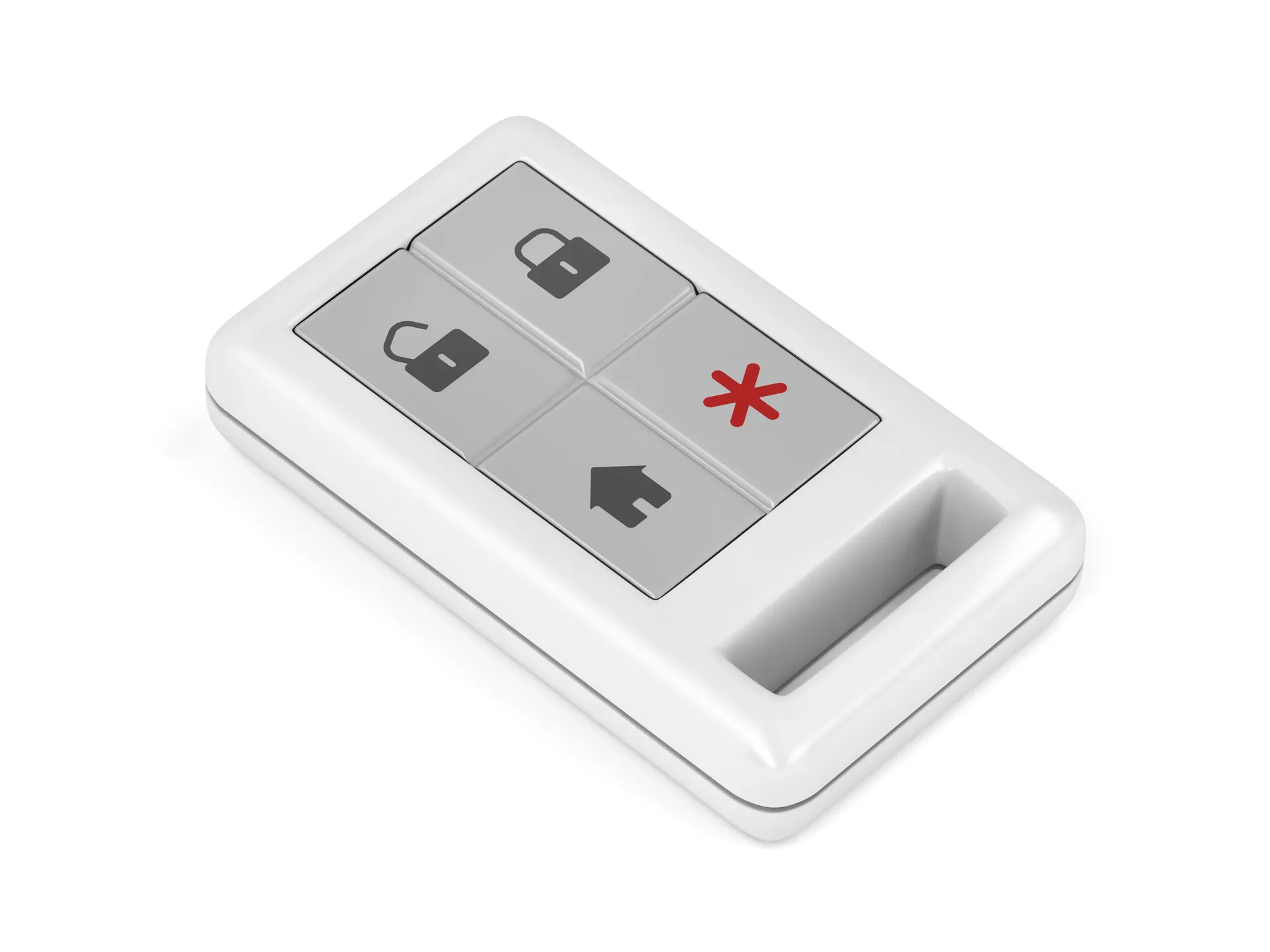
Safety Sensors
Sensor Problems and Doors That Won't Close
If your door opens fine but won't close, or starts down and immediately goes back up, the safety sensors are the first place to look. These photo-eye sensors sit near the floor on each side of the door, and the opener won't close the door if the beam between them is blocked or misaligned. Many openers flash the light on the motor head or show a code when they detect a sensor problem. Check the small indicator lights on each sensor. On most models, both glow steadily when the beam is lined up. A flickering or dark light points to the problem.
Common causes are easy to miss. A sensor gets bumped by a trash can, a bike or a shovel and ends up pointing off to the side. Dirt, cobwebs or snow cover the lens. Low winter sun shining straight into the garage can overwhelm a sensor in the late afternoon. The thin low-voltage wires running to the sensors can be chewed, stapled through or pinched. Homeowners can safely wipe the lenses and gently realign a bumped sensor by hand until the lights go steady. If that doesn't work, we test the wiring and the sensors and replace whichever part has failed.
Never disconnect or bypass the safety sensors, even when they're frustrating. They're required under the UL 325 standard and are what stop a closing door from coming down on a child, a pet or a car. On many openers, holding the wall button down will force the door closed when the sensors fail. That can work as a temporary measure, but only if you watch the door the whole way down. The real fix is getting the sensors working again. After any sensor repair, we test the sensors and auto-reverse to confirm the door stops and reverses as it should.
Inside the Opener
Logic Boards, Gears and Limit Settings
When the opener hums but the door doesn't move, or the motor runs while the trolley stays put, the drive gear is a prime suspect. Many chain and belt openers use a nylon drive gear inside the motor head, and after years of use it wears down or strips. Gear replacement is a common repair and is often worth doing on an opener that's otherwise in good shape. A humming opener can also mean a failed capacitor on some AC models, a door frozen to the floor, or a broken spring making the door too heavy to lift. We figure out which before replacing any parts.
The logic board is the opener's brain. It receives remote signals, reads the safety sensors and limit settings, and controls the motor. Power surges from summer storms are a common cause of board failure. Symptoms include an opener that doesn't respond to anything, lights that flash erratically, or doors that move on their own. Replacement boards are available for many models, but they can be expensive for older openers, and some boards are no longer made at all. When a board fails on an opener that's already many years old, that's often the point where replacing the opener makes more sense.
Limit and force settings tell the opener where to stop and how hard to push. If the door closes and immediately reverses, stops short of the floor, or opens too far and bangs the stop bolts, the limits likely need adjustment. Limits can drift after a new bottom seal, a track adjustment or seasonal changes in the door. Force settings are a safety matter. If force is set too high, the opener can push through an obstruction instead of reversing. We reset limits and force to the minimum that works reliably, then test auto-reverse with a flat board on the floor.
- Stripped drive gears and sprockets
- Failed logic boards after power surges
- Worn capacitors on older AC units
- Travel limits set too short or long
- Force settings too high for safety
- Worn trolleys, chains and belts

What to look for
Signs Your Opener Needs Repair
Remote Works Only Up Close
If you have to be right next to the garage for the remote to work, check the battery first. If that's not it, the antenna on the motor head may be damaged or tucked out of sight, or nearby LED bulbs or electronics may be causing radio interference.
Door Reverses Before Closing
A door that starts down and immediately goes back up usually points to the safety sensors, a limit setting that's off, or something binding in the door. The opener reverses because it thinks it hit an obstruction, even when nothing is in the way.
Motor Hums, Door Stays Put
A humming motor with no movement can mean a stripped gear, a failed capacitor, a door frozen to the floor or a broken spring. Don't keep pressing the button, since repeated attempts can overheat the motor or damage the logic board.
Opener Runs, Door Doesn't Move
If you hear the motor and see the chain or belt moving but the door stays still, the trolley may be disconnected or broken. Check whether the emergency release was pulled. If it wasn't, the trolley or carriage may need to be replaced.
Lights Flashing or Blinking
Many openers flash their light or blink an indicator in a pattern to point to a specific error, such as a sensor problem or a motor fault. Count the flashes and tell us when you call, since it helps us narrow down the problem before we arrive.
Grinding or Unusual Noise
New grinding, rattling or clicking from the motor head can mean worn gears or a loose sprocket. A chain slapping the rail may need its tension adjusted. Noise that changes quickly is worth checking before it turns into a breakdown on a cold morning.
Our process
How we handle opener repair
The same careful routine on every visit, so nothing gets missed.
- 1
Ask and Observe
We ask what the opener has been doing and watch it run. Flash codes, sounds and when the problem happens all help narrow down the cause. Details like a recent storm, a power outage or new light bulbs can point straight to the issue.
- 2
Check the Door Too
With the opener disconnected, we lift the door by hand to check balance and look at springs, cables, rollers and track. Many apparent opener problems start with the door, so we confirm the cause before replacing any opener parts or quoting the repair.
- 3
Repair the Fault
We fix what's broken, whether that's programming remotes, realigning or replacing sensors, swapping a gear or logic board, or resetting limits and force. We carry common parts on the truck, and you get the price before any work starts on your opener.
- 4
Test Safety and Function
We run the door through several full cycles, test the remotes and keypad, check the safety sensors and auto-reverse, and confirm the limits are right. Then we explain what failed, what we replaced and what to watch for in the future.
Repair or Replace
When It's Time to Replace the Opener
Many opener problems are well worth repairing. Remotes, keypads, sensors, gears, trolleys and limit adjustments are usually reasonable fixes that give you years more use. But there are times when repair means throwing good money after bad. If the opener is old enough that it has no safety sensors, it should be replaced, full stop. If it uses a dip-switch remote system, it's far less secure than any modern unit. And if the logic board fails on an opener that's well over a decade old, or several parts are wearing out at once, a new unit is often the better value.
We look at the age of the opener, the cost of the needed parts, whether those parts are still available, and how the opener has been performing overall. Then we give you both options. Sometimes a modest repair will keep a solid opener going for years. Other times the repair price is a meaningful fraction of a new opener with battery backup, smart control and a quieter drive. We won't push you to replace an opener that only needs a simple fix, and we won't keep patching one that's clearly at the end of its life.
It's also worth knowing that many opener problems are really door problems. A door with a broken spring, a frayed cable or rollers binding in bent track is too heavy or too stiff for the opener to move, and the opener gets blamed. Running an opener against an unbalanced door wears out gears and boards quickly. That's why every opener repair visit includes a check of the door's balance, springs, cables and track. If the door is the real issue, we'll show you, and fixing it often makes the opener run the way it should again.
What affects the price
Type of Repair
Programming remotes, cleaning or realigning sensors and adjusting limits are quick fixes. Replacing a gear, trolley, logic board or motor takes more time and parts, so the specific failure is the biggest factor in the final price of the repair.
Opener Age and Brand
Parts for current models from major brands are widely available. Older openers may need parts that are harder to find or no longer made at all, which can raise the price or make replacement the more sensible choice for your garage.
Door Condition
If the opener problem is really caused by a broken spring, a damaged cable or binding track, those repairs are added to the job. Fixing the door first protects the opener and any new parts from wearing out early.
Accessories Needed
New remotes, outdoor keypads, sensors, wall controls, smart adapters or car compatibility adapters are priced separately. We'll tell you which ones you actually need to fix the problem and which are optional upgrades you can skip.

Local know-how
Storms, Cold Snaps and Openers Around Pewaukee Lake
Pewaukee's weather explains a lot of the opener calls we get. Summer thunderstorms moving across Pewaukee Lake bring power flickers and surges that can damage logic boards, and the call usually comes the next morning when the remote won't work. In winter, subzero nights drain remote and keypad batteries, stiffen lubricant in older openers and freeze bottom seals to the slab, so the motor strains against a door that won't budge. Low winter sun shining down the driveway can confuse safety sensors on west-facing garages in the late afternoon, and snow and salt kicked up near the door can coat the lenses. In the older ranches and split-levels around the Village and City of Pewaukee, we still find openers from the 1980s and 1990s, some with no sensors at all. In newer subdivisions, smart openers and keypads are common, and their troubles are more often about Wi-Fi, programming or app settings.
Opener Repair FAQ
Questions about opener repair
Answers from the technicians who do this work across Pewaukee every week.
Ask a technicianWhy won't my garage door close all the way?
The most common reason is the safety sensors: they're misaligned, dirty, blocked or have a wiring problem. Check that both sensor lights are steady and that nothing is in the beam's path. If the door reaches the floor and then reverses, the close limit or force setting may need adjustment. Something binding in the track or a damaged roller can cause the same behavior.
Why does my opener hum but not open the door?
A humming motor that doesn't move the door usually means a stripped drive gear, a failed motor capacitor on some AC models, or a door that's too heavy to lift because a spring broke or the bottom seal froze to the floor. Stop pressing the button and look for a broken spring above the door. Don't try to force the door open if a spring is broken.
How do I reprogram my garage door remote?
Most openers have a learn button on the motor head, often near the light cover or antenna. Pressing it and then pressing the remote button within a set time programs the remote. The exact steps vary by brand and model, so check your manual or the maker's website. If it still won't program, the remote may not be compatible or the board may have a fault.
Can a power outage damage my opener?
Yes. Surges when power returns after a storm can damage logic boards and other electronics. A surge protector suited to the opener can help, though some manufacturers recommend specific types. If your opener stops responding after an outage, check the circuit breaker and outlet first, then try unplugging the opener for a minute and plugging it back in before calling us.
Is it worth repairing an old garage door opener?
It depends on the opener's age, the part it needs and its safety features. A gear or sensor repair on a solid opener is usually worth it. If the opener has no safety sensors, uses old fixed-code remotes, or needs a costly logic board after many years of service, replacement is often the better value. We give you both options and let you decide.
Can I use my door if the opener breaks?
Usually. Pull the emergency release cord on the trolley, ideally with the door closed, and operate the door by hand. If the door feels very heavy or won't stay in place when partly open, the springs may be broken or out of balance. Don't try to lift a door with a broken spring. Call us instead, since it can drop suddenly and cause injury.

Opener Acting Up? We Can Help
Call Pewaukee Garage Doors for opener repair in Pewaukee and nearby Lake Country. We'll find the real cause, explain your repair and replacement options, and quote the price before work starts.
More services
Other ways we help Pewaukee homeowners
 Service & RepairGarage Door RepairLoud, crooked, slow or stuck. We find the cause and fix it properly.
 Service & RepairEmergency RepairDoor stuck open or car trapped inside? Call early for same-day help.
 Service & RepairSpring ReplacementTorsion and extension springs sized to your door and balanced by hand.